Industrial Hygiene Concentration
ANSAC-ABET Accredited
Intro Heading link
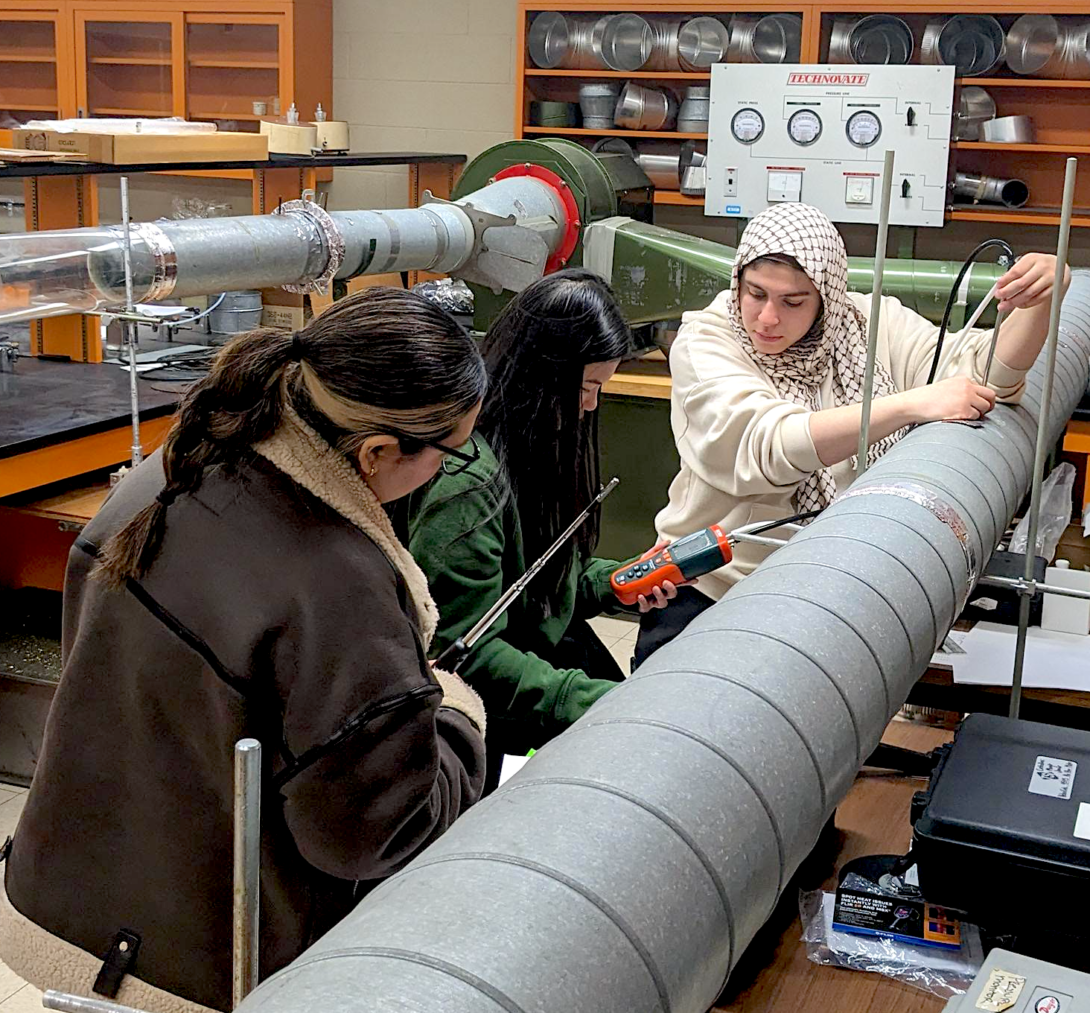
The goal of industrial hygiene is to ensure workers can work in a safe and healthy environment. The Industrial Hygiene concentration aims to prepare students for careers assessing hazardous workplace exposures.
Industrial hygiene is the process of recognizing, evaluating, and preventing exposures in the workplace. Exposures may be chemical (e.g. carbon monoxide), biological (e.g. infectious disease), psychosocial (e.g. work stress), or physical (e.g. too loud) in nature. Our industrial hygiene concentration provides students from diverse backgrounds with the skills and knowledge necessary to assess hazardous workplace exposures. Industrial hygiene is a rapidly growing field and we prepare students for exposure science careers in a wide variety of sectors, including private industry, government, research and development.
Students who complete the Industrial Hygiene program reduce the requirements to be a Certified Industrial Hygienist (CIH ®) and are eligible to become a Graduate Safety Practitioner (GSP ®) upon graduation ahead of Certified Safety Professionals (CSP ®) certification. The Applied and Natural Sciences Accreditation Commission of ABET accredits the Industrial Hygiene Program.
Students in Environmental and Occupational Health Sciences may choose to pursue a formal concentration in Industrial Hygiene as part of the MPH or MS degree programs by noting such in their application materials. Apply today!
Degrees & Curriculum Heading link
Students can enroll in our Master of Public Health (MPH) or Master of Science (MS) program in industrial hygiene. All students will gain the knowledge and skills necessary to assess exposures, identify hazards, and assess risk. Which degree is right for you?
MPH: Practical focus, with internships and capstone projects.
MS: Research-oriented, with a thesis requirement.
Students must complete the school-wide core requirements and a sufficient number of the following courses as part of their divisional and elective choices as necessary to attain 49 semester hours of credit for the Master of Public Health degree and 53 semester hours of credit for the Master of Science degree. In addition, students must adhere to the divisional requirements as stipulated for their individual program of study.
-
Industrial Hygiene Core (25 semester hours)
- EOHS 421 – Occupational Health and Safety Practice (2 semester hours)
- EOHS 424 – Evaluation and Control of Radiation Exposures (1 semester hour)
- EOHS 425 – Evaluation and Control of Physical Agents (2 semester hours)
- EOHS 426 – Evaluation and Control of Airborne Contaminants (4 semester hours)
- EOHS 427 – Evaluation and Control of the Psychosocial Work Environment (2 semester hours)
- EOHS 495 – Environmental and Occupational Health Sciences Seminar (1 semester hour)
- EOHS 501 – Exposure Assessment Strategies (3 semester hours)
- EOHS 502 – Environment, Toxicology, and Disease (4 semester hours)
- EOHS 556 – Risk Assessment in Environmental and Occupational Health (3 semester hours)
- EOHS 563 – Occupational Safety and Health Management Systems (3 semester hours)
Additional Requirements
Trainees are required each year to:
- Attend all weekly Illinois ERC Interdisciplinary Seminars (EOHS 495) (held weekly throughout the academic year)
- Attend at least 4 Industrial Process Tours each year
- Attend one evaluation meeting at the end of each semester
Trainees are required to complete once:
- Present an Industrial Process Talk (scheduled during the ERC Seminar)
Admission Requirements Heading link
All students interested in studying industrial hygiene must have a full year of college-level math, and courses in chemistry, organic chemistry, biology, and physics.
Funding & Traineeships Heading link
Each year the Great Lakes Center for Occupational Health and Safety in collaboration with NIOSH, funds an average of ten students as Industrial Hygiene trainees. Due to federal funding of the trainee program, only US Citizens and US Permanent Residents are eligible to be considered for these positions. These traineeships are awarded to MPH, MS, and PhD students with US citizenship interested in pursuing an Industrial Hygiene curriculum.